I'm tired of hearing "SEO is dead" every time Google releases a new feature or AI gets mentioned in a marketing conference. And the constant parade of rebranded acronyms trying to replace good old-fashioned SEO & marketing.
Let me be clear: SEO isn't dead. It's evolving. It's changing faster than ever before, yes, but the fundamental principles that have driven this discipline for over two decades remain as relevant today as they were, but if you are still stuffing keywords and buying dodgy backlinks from link farms, your approach is dead.
The difference now? SEO has evolved from "Search Engine Optimisation" to "Search Everywhere Optimisation" – and that's not just another rebrand. It's a recognition of reality, I’ve been using this term for a while, but I will give credit to Ashley for popularising it!
The Perpetual Rebranding Circus
Every few months, someone in our industry decides they've cracked the code and invented the "next big thing" that will replace SEO. We've had:
- AEO (Answer Engine Optimisation)
- GEO (Generative Engine Optimisation)
- SGE Optimisation (Search Generative Experience Optimisation)
- VEO (Voice Engine Optimisation)
- CEO (Conversational Engine Optimisation)
- SXO (Search Experience Optimisation) - actually i quite like that one as I feel it is a core part of what people miss in traditional SEO and it helps align with business objectives.
And the list goes on. Each one claiming to be the "future of search" while completely missing the point.
Here's what frustrates me about this endless rebranding: it's solving a problem that doesn't exist. We don't need new acronyms every time Google adds a feature or changes how results are displayed. What we need is to understand that SEO – the real discipline of helping people find information – has always been about adapting to how search evolves.
What SEO Actually Means (And Always Has)
At its core, SEO has never been about gaming search engines. Despite what the salesmen and reddit would have you believe, effective SEO has always been about one fundamental thing:
understanding how people search for information and helping them find what they need (marketing).
That's it. Everything else – the technical optimisation, the content creation, the link building, the user experience improvements – these are all just tactics in service of that central mission.
I started in this industry, before Google was a thing, directory submission and calling your brand ‘AAA Recruitment or A1 Taxis actually helped’ then of course Google, and people searched by typing keywords into Google and clicking on blue links. Today, they might:
- Ask Siri a question while driving
- Take a photo of a product to find where to buy it
- Watch a YouTube video to learn how to fix something
- Ask ChatGPT for recommendations
- Browse TikTok for restaurant reviews
- Use voice search on their smart speaker
The behaviors have changed. The interfaces have evolved. But the fundamental human need to find information remains constant. And that's exactly what SEO optimisation has always been about.
Search Everywhere Optimisation: The Real Evolution
This is why I prefer
Search Everywhere Optimisation - SEO over all these trendy new acronyms. It's not a rebrand – it's an acknowledgment that search happens everywhere now, not just in that little white box on Google.com.
People search:
- On Google (traditional web search, SGE, AI Overviews)
- On social platforms (TikTok, Instagram, YouTube, LinkedIn)
- On e-commerce sites (Amazon, eBay, Etsy)
- In AI chatbots (ChatGPT, Claude, Gemini)
- Through voice assistants (Alexa, Siri, Google Assistant)
- In mobile apps (maps, shopping, travel, food delivery)
- On streaming platforms (Netflix, Spotify, YouTube)
Each of these has its own algorithm, its own ranking factors, its own user behaviors. But the fundamental SEO principles – understanding user intent, creating relevant content, providing excellent user experiences, building authority and trust – these apply across all of them.
The SGE and AI Panic: Missing the Forest for the Trees
Let's talk about Search Generative Experience (SGE) and AI Overviews, since these seem to be causing the most panic in our industry right now.
Yes, Google is showing AI-generated answers at the top of search results. Yes, this changes how some queries are answered. But no, this doesn't mean SEO is dead or that we need to completely reinvent our approach.
Here's what I've observed after monitoring SGE performance across dozens of sites:
What's Actually Changing:
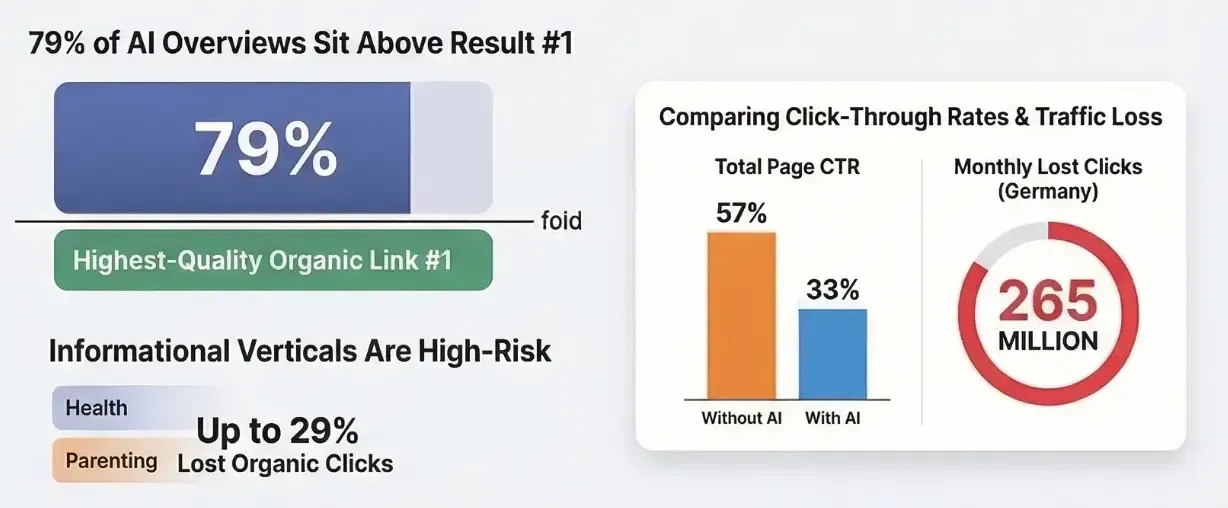
- Zero-click searches are increasing for simple informational queries
- Long-tail and complex queries still drive significant traffic
- Commercial intent keywords are less affected by AI overviews
- Local search results remain largely unchanged
- Video and image search continue to grow
What's Staying the Same:
- Quality content still ranks well and gets featured in AI responses
- E-E-A-T signals (Experience, Expertise, Authoritativeness, Trustworthiness) are more important than ever, even if it isn’t a ranking factor, it's a conversion factor.
- User experience factors continue to influence rankings
- Technical SEO fundamentals still matter for crawling and indexing
- Brand recognition helps content get selected for AI summaries
The sites that are panicking about AI are often the ones that were already on shaky ground – thin content sites, low-quality publishers who were gaming the system rather than serving users.
The Fundamentals That Never Change
While the interfaces and algorithms evolve, these core SEO principles remain constant:
- Understand Your Audience
Whether someone's typing into Google, asking Alexa, or browsing TikTok, you need to understand:
What they're looking for
How they search for it
What problems they're trying to solve
What format they prefer information in - Create Genuinely Helpful Content
This hasn't changed since day one of SEO. The content that performs well in AI overviews is the same content that performed well in traditional search: comprehensive, accurate, well-researched, and genuinely helpful. - Build Real Authority
Whether it's backlinks, social signals, brand mentions, or being cited by AI systems, authority still matters. But it has to be real authority based on expertise and trust, not manufactured through manipulation. - Optimize for User Experience
Fast loading times, mobile responsiveness, clear navigation, easy-to-find information – these factors matter whether someone finds you through Google, social media, or an AI recommendation. - Make Your Content Discoverable
This means following technical SEO best practices, using structured data, creating clear information architecture, and yes, still optimizing for keywords – because that's how both humans and algorithms understand what your content is about.
The KPIs Are Evolving (And That's Fine)
One thing that is genuinely changing is how we measure success. The traditional metrics of organic traffic and keyword rankings are becoming less comprehensive as search behaviors diversify.
Traditional Metrics (Still Important):
- Organic search traffic
- Keyword rankings
- Click-through rates (calculated correctly, not at an site level)
- Engagement metrics (please note, I also rant about this seperately)
- Conversions
Note - I rant repeatedly about averages of these metrics, sitewide being
Expanding Metrics (Increasingly Important):
- Brand search volume (people looking for you specifically)
- Direct traffic growth (repeat visitors, brand awareness)
- Cross-platform visibility (appearing in various search environments)
- AI citation frequency (being referenced in AI responses)
- Voice search performance (local and mobile queries)
- Social search visibility (discovery through social platforms)
The smart SEOs are already tracking these broader metrics because they understand that success in "Search Everywhere Optimisation" requires a more holistic view.
Why the Rebranding Doesn't Help
Here's my fundamental issue with constantly rebranding our discipline: it creates confusion and undermines the legitimacy of what we do.
When we keep changing what we call ourselves, we're essentially telling the world that our previous work was wrong or outdated. That's nonsense. The technical SEO work I did ten years ago is still serving websites well today. The content strategies that worked in 2015 are still driving traffic and conversions.
What's changed is the complexity and the number of channels we need to consider. But calling it "GEO" or "AEO" or whatever new acronym is trendy this month doesn't make our work more legitimate or effective.
It just makes us look like we don't know what we're doing.
The Acceleration Problem
There's no denying that SEO is changing faster than ever before. What used to be annual or semi-annual algorithm updates are now continuous refinements. New features launch monthly. AI capabilities expand weekly.
This acceleration is real and it's challenging. But it's not unprecedented in the world of digital marketing. Social media platforms change their algorithms constantly. Advertising platforms introduce new features regularly. Email deliverability rules evolve continuously.
The solution isn't to rebrand ourselves every time something changes. The solution is to:
Build Adaptable Systems
Instead of optimizing for specific features, build content and technical systems that can adapt to change. Focus on fundamentals that transcend any single algorithm or interface.
Stay Close to User Behavior
Monitor how your actual users are finding and interacting with your content. Don't just chase the latest Google announcement – watch what real people are actually doing.
Diversify Your Approach
Don't put all your eggs in one basket. Build visibility across multiple search environments, social platforms, and discovery mechanisms.
Maintain Long-term Perspective
Some changes are fundamental shifts (like mobile-first indexing). Others are temporary experiments (like Google+ integration). Learn to distinguish between the two.
What This Means for SEO Professionals
If you're working in SEO today, here's my practical advice:
Embrace the Expansion
If you work in SEO it is changing - you now need to understand:
- Traditional web search optimisation
- AI and generative search behaviors
- Social platform algorithms
- Voice search patterns
- Local search dynamics
- E-commerce platform optimisation
- App store optimisation
But this isn't a bad thing – it makes you more valuable, not less.
Focus on Universal Principles
- Instead of chasing every new feature, focus on the principles that work across all platforms:
- User intent understanding
- Quality content creation
- Technical excellence
- Authority building
- Experience optimisation
- Communicate Value Clearly
Stop apologizing for being an "SEO" and stop trying to rebrand what you do. SEO is a legitimate, valuable discipline that's evolved with the internet. Own it.
The Future Is Still SEO
Will search continue to evolve? Absolutely. Will AI change how people find information? It already is. Will new platforms and technologies emerge? Without question.
But the fundamental mission of SEO – helping people find the information they need – will remain constant. The tactics will evolve, the channels will multiply, and the complexity will increase. But the core discipline will endure, it is a core and valuable part of digital marketing.
Instead of constantly rebranding what we do, let's get better at doing it. Let's embrace the fact that SEO now means "Search Everywhere Optimisation" and build our skills accordingly.
The SEO professionals who succeed in this evolving landscape won't be the ones with the trendiest acronyms. They'll be the ones who understand that good SEO has always been about serving users, building authority, and creating excellent experiences – regardless of where or how those users are searching.
Stop the Rebranding. Start the Evolutio
So here's my challenge to our industry: let's stop wasting energy on rebranding and start focusing on evolution. Let's acknowledge that SEO has grown beyond its original scope without abandoning the principles that made it valuable.
Let's call it what it is: SEO. Search Everywhere Optimisation. The discipline of helping people find what they need, wherever they're looking for it.
Because at the end of the day, whether someone finds your content through Google's AI Overview, TikTok's algorithm, Amazon's search function, or ChatGPT's recommendations, the fundamentals that got them there are the same fundamentals we've been working on all along.
SEO isn't dead. It's not even close. It's just getting more interesting.
Image credit - Alan Levine